Thursday, April 28, 2016

Will Britexit help SMEs?

With big business mainly aligned with the government, together with most political parties and trade unions, the campaign to remain in the EU  has plenty of funding and backing to win the upcoming UK referendum. But what about the SME's who are expected to provide the growth needed for more jobs?

Government statistics show that 99.9% in 2015 were SME's providing  60% of all private sector employment in the UK. So an important sector of the UK economy then - where do these businesses stand? This week I spoke at length to a businessman who runs a medium size business which provides major plant hire to the construction industry. He and his business partner were strongly in favour of leaving the EU even though he thought there could be an economic downturn for a while, but a Britain once again free of the burden of EU legislation would soon re-focus and within a few years be booming. His views of an independent Britain were generally optimistic, as with others of the older generation, who tend to view Europe as more of a 'basket case' than the blueprint for a better future.

The Government pro EU campaign claims 'over 3 million jobs are linked to exports to the EU.' This statement in the now infamous £9 million leaflet leaves the suggestion that if the UK leaves, 3 million people will lose their jobs. How this figure was reached who knows. It is a fear of job losses that may influence individual voters.

In summary much of the Government's economic and business case to remain in the EU is to offer a gloomy alternative. Against this the optimism of the business owners in the vital SME camp is coming from people who have succeeded in building successful businesses and see independence as a great opportunity. An opportunity and positive spirit that needs to be eloquently argued if the referendum is to be won by the 'leave' campaigners.

Thursday, April 21, 2016

Is negative marketing a good idea?

When it seems difficult to find something positive to say about your product, is turning instead to making negative statements about your competitors offer going to get you more business?

As the UK Referendum campaign is now officially underway, it is the Government that has opened the offensive, last week with the £9 million leaflet and now with a Treasury report concluding that the UK is better off remaining a member of the EU or else we would all be a few thousand pound worse off. The thing is nobody actually knows. Those supporting the campaign to leave the EU claim the UK  would be £20 billion a year better off because instead of paying such sums into the EU, that money could be better spent on our people. Not so much of a forecast as saving the club fees.

The real issue for the stay in the EU group is that the product - the continued EU membership - is a bit  tired. It seems to be difficult to identify the product benefits. In fact the Prime Minister himself talked about the need for reform and claims rather disingenuously to have recently achieved major reforms. The proposition for the stay in campaign is we will all be better off, it is good for business and jobs and we can block immigrants now. But the backing to this vague message is that if we leave, we will lose jobs, our security would be undermined and everyone would have to shoulder the burden. The promoters are those with most to lose - politicians, big business, trade unions most of the political parties and some prominent people. Many were not born before the UK joined up so will have little direct comparison of life before and since.

The leave campaign's central proposition is more difficult to pin down and the case is barely being made other than to refute the frightening doomsday warnings of big time damage to the UK economy labelled as 'project fear'. Older voters will reflect that the post  Second World War generation were the first to voluntarily choose to travel to Europe on holiday, in serious numbers. Previous generations had certainly visited but in the colours of a British Expeditionary force. The great peace-time 'pay off' was not due to the then infant EU, but to the fact  German plans for controlling Europe had been defeated. For the Brits a European vacation pre- Euro was cheap and offered the opportunity for a decent amount of duty free fags and booze to be carted back home as a bonus and all for a British Visitors Passport you could buy for 7 shillings and sixpence at the Post Office! All pleasures now lost by being EU members. Along with the fun of messing around with foreign coinage. Along the way the old Imperial system of measurements has been sacrificed - well partially - we buy petrol by the litre but consume it by the mile, we still have 4 pints of milk in a bottle, but it is labelled as 2.73 litres!

So will the negative campaign pay dividends? Well the older generation have put up with worse, so they are more likely to respond to the nostalgia of the past if offered as a persuasive vision for the future. If the 'in' crowd can paint a more inspirational future of a rebranded EU than the 'out' crowd can re-ignite and evoke calls to a brighter future back in the world then they have got to drop the negative approach quickly.

Monday, April 11, 2016

Is this the most expensive leaflet ever?

The news that the UK Government is picking up an Invoice somewhere in excess of 9 million pound  for a leaflet promoting their case for the EU, has left many people stunned. How could a slim 16 page, landscape brochure possibly cost so much?

A copy of this document arrived at our home today and if had not been for the outcry the leaflet had generated it would probably been consigned directly to the recycling bin. Apparently the brief to whoever designed the leaflet was to provide 'The Facts' about continued British membership of the European Union. Sort of like a 'White Paper' we advise our 'knowledgeable' b-2-b clients to produce to explain the background to the state of knowledge etc. within the market relevant to their products. Such a White Paper in the b-2-b world would be written by an expert in the field and would outline the state of knowledge, the technologies, legislation, international standards etc and provide references to factual sources, to give the prospective buyer a fair view of the market sector and provide a useful background against which to make the eventual product purchase decision.

So does this leaflet meet these lofty aims - is it a document packed with essential facts and evidence offering a 'state of play' independent statement on the actual situation, or is it as opponents claim merely propaganda for one side of the referendum debate?

The design is rather bland, dated and unexciting. I  cannot imagine any of our clients however mundane their products might be, being excited or impressed when the agency account manager presented the concept at the agency/client meeting. I wouldn't have let it get outside the design studio if it were me. And I  wonder how discretely the value of the invoice was introduced? In hushed aside, "I  have put the 'paper work' in this envelope Prime Minister if you would be kind enough to pop it round to George to look after." Of course a lot of the cost is delivering something like 27 million copies to every home in the land. So why print a few rain forests worth of brochures in the first place and not go online?

Lets have a quick look inside the less than memorable front cover where we discover the style is left hand page 'facts' right hand facing page a picture. This is it:-

  • 'An important decision for the UK' - opposite a photograph of a calendar with 23rd June ringed round.
  • 'A stronger economy' - a mainly fuzzy out of focus photo of two men in blue overalls apparently doing something with some  metal parts with the statement 'Over 3 million UK  jobs linked to exports to the EU'.
  • 'Improving our lives' - photo of an old wire hand held supermarket basket containing some oranges.
  • 'What happens if we leave' - photo of container ships most likely delivering manufactured good from China.
  • 'Controlling immigration and securing our borders' - photo of UK Border sign white text and blue background
  • 'The benefits of EU membership' - photo of a group of four people in a kitchen, two ladies sitting at a table a lady possibly cutting oranges - same prop as in the earlier photo? - and a man polishing a mug with a tea towel. Strange.
  • A once in a generation decision - photo of young couple carrying a baby.
Where figures, or indeed any facts are quoted, there is no reference to the source or interpretation of what they mean. I wonder if the client thinks it is money well spent?

Thursday, April 07, 2016

Marketing for small start up businesses.

So you have a great idea, you have started to turn that idea into reality and you have achieved your first orders and demonstrated the concept is viable. What next?

In previous blogs we have looked at the huge numbers of small businesses in the UK - in fact 99.9%. Small business numbers have grown 55% since the year 2000. My daughter and her husband visited us over the weekend and I guess their experience is typical of many start up businesses. Unlike the traditional trades - painters, plumbers, plasterers, carpenters etc - their fledgling business is an online store selling personalised clothing to the equestrian fraternity. They both have full time day jobs, have a young daughter who is involved in sports clubs and needs to be taken to and from which means they are developing their business in their spare time. Very soon they have recognised a need for marketing and asked my advice. In a nutshell do as much as you can for free, in particular using social media and don't spend cash on display advertising and directories. But do use your customers to endorse your product and use word of mouth third party recommendations.

My first step would be to really understand the market they are addressing and that starts with research.   I  have no experience of the equestrian market at all - the sector of interest to them - but just a click away the British Horse Society offers an interesting page titled 'Equestrian Statistics' and straight away I  spot that their trade association had conducted market research as recently as 2015. Some 1.3 million people from amateurs to professionals ride horses.  This struck an immediate chord that this is more than an industry, it is a hobby, interest, a passion and probably an obsession for a significant number of people ... people who will willingly spend on anything than is related to their passion. In my analysis it is likely to exhibit traits I  have observed in other market sectors I am familiar with such as amateur dramatics and dance, which have a similar diversity from amateur to professional, not just participating but also as an audience. The next interesting statistic is 74% of riders are women - already we are beginning to get a feel for the target audience and are upon the way to identifying and defining a persona representing the target audience.

It is worth taking the time to develop a Market Analysis which need not be a complex document, but should still be written down. Here are some key points to cover:-
  • About your company - as a start-up there will be little history, but you can identify the 'nature of business,' type of business, size and where you operate.
  • Products and services - what is the range of products you offer and what services do you provide. 
  • Competition - who are the existing businesses in your market sector, how do their products compare to yours - e.g. for range and for quality. What sort of businesses are they? Big/small/well-established/new? How do customers view them or rate them?
  • Target markets. Operating on the Internet, enquiries might come from anywhere which prompts the question, do you want to export products yet? Will you get paid? Do you want all the paperwork? I  suggest you start with a local geographic area you can support and know, before reaching out to the rest of the UK, except for the highlands and islands, because couriers don't all handle those areas.
  • Target audiences. We have already touched on this and it is important to identify who the customers will be for your products. You can start by examining the customers you have already - age, interests, location, male or female etc. and what media do they consume, especially social media such as are they on Facebook a lot, read equestrian magazines etc.?
  • Route to market. You will probably start with direct sales one-to-one with your customers. But how will you deal with people who want to hold stock and take orders on your behalf, because they will want a discount and can you afford that?
 Your recent customers can also provide some valuable input to your research, marketing and business development.
  1. Draw up a short survey to find out why they bought your product, how they found out about you, what they like about your product and would they recommend you to a friend?
  2. Ask if they will let you use them as a reference - a third party endorsement is regarded as more honest than paid for space.
  3. Offer them a small discount on their next purchase if they recommend you to say 3 friends.
 By now you should have a good understanding of your customers and prospects i.e. more like them, where they look for products like yours, web sites, social media etc so now it is time to start a marketing communications programme.

Marketing communications
Few start-ups will have cash to spare on display advertising so be aware of the advertising space sales people who call to offer a great deal. Today there are several 'free' options that can be used quite quickly.

Here are some suggestions to work at getting the 'word' out about your business without spending money.
  1. Press releases - send interesting news stories about your product or service to special interest magazines and web sites  covering your target market - include a good quality and interesting photo. Send to local press too - they like local business news, but don't let them sell you and advertisement.
  2. Short videos  - show customers wearing and talking about your product - post to YouTube, Facebook etc
  3. Newsletter (html) - new products etc for emailing to customers; add email request on your web site. Don't send too often, you probably haven't the time anyway, but quarterly would be good or when you have an important new product to announce.
  4. Set up a blog - offer helpful information, link to other relevant blogs and web sites and build an audience.
  5. Use Twitter - 140 character headlines and shortened links to the full story on your web site.
  6. Use Pinterest - themed photos relevant to your products.
  7. Use Instagram - more photos!
Although you are doing this for free, that does not take account of your time, not just the cost of your time, but that while you are doing this you are not running your business. It is a good way to start but only in the short term. If you are not good at writing, photography, video and techie internet stuff then before long you are going to need someone who is - so start budgeting for outsourcing marketing when you have enough money to afford it.


Wednesday, March 30, 2016

Talking small business

According to Government statistics there has been sustained growth in the total business population, an increase of 55 per cent, since the year 2000.

Looking inside this number, 90% of this increase of 1.9 million businesses is due to what they describe as 'non-employing' businesses. In total 99.9% of all the UK's 5.4 million private sector companies were classified as SMEs accounting for 60% of all private sector employees and a total turnover of £1.8 trillion! And the biggest sector of the UK businesses is "Professional, scientific and technical." Somewhere in this array of statistics is an interesting paradigm shift - 76% of these companies have just one person.

Technical Marketing Ltd [which was founded in 1999] has been well placed to observe and comment on the rapid growth of a different type of business model in the professional, scientific and technical sector of the UK economy, since 2000. Our business model is not unusual in this vibrant sector and in official jargon is a 'non-employing business'. Why do we not employ staff? Because we don't need to. Ours is essentially a knowledge business and can to a very large amount of the time operate with an Apple iBook from anywhere with a suitable Internet connection. That is not to say we don't employ people, because we do. We use businesses just like us for a range of skills such as programming, design, video, accounting, web hosting, translations etc. We provide a brief, agree a price and timescale and project manage the delivery of sub-contracted work. This has some very valuable benefits. We don't have to manage people. We don't have to own or rent premises. We don't have to deal with HR. We don't have to deal with a whole web of employment law. 

You don't hear politicians talk about this business model apart from figuring ways to impose more tax. The current Referendum campaign talks about employment, the 'Britain Stronger in Europe' web site proclaims 'being part of Europe means more jobs and opportunities.' It adds '3 million UK  jobs are linked to our trade with the EU.' Further a news release says '81% of UK small businesses want to stay in the Europe.' It continues 'More jobs, lower prices, less paperwork and its as easy to deliver to Berlin as it is to Birmingham.' The accompanying video on Facebook says 'over 200,000 UK  companies trade with EU countries.' 

Interesting. Do they mean 200,000? It's less than 4% of the 5.4 million private sector companies. Lets talk about the benefits for business advanced by the pro EU camp.

  1. More jobs. I  would suggest few small businesses consider their purpose is to create jobs. Bearing in mind that a majority of these small businesses by far are single person companies job creation is not what motivates them.
  2. Lower prices. This is based on the premise that British businesses outside the Euro tariff barrier would have to sell their products at a higher price into Europe. When the Euro currency was introduced prices in those countries ramped up fast. European regulations have tended to make goods more expensive, not cheaper. Off shore, mainly Far Eastern production, where there is far less regulation is what has lowered costs.
  3. Less paperwork. Really! What about the EC Sales returns?
  4. As easy to deliver to Berlin as Birmingham. Hmm? That's due to couriers - hardly an EU creation the rest of the world has them too. 


Tuesday, March 22, 2016

Talking about the global market

The global market which has evolved particularly since the widespread adoption of the Internet has created a paradigm shift in how products are designed, built and delivered.

In the early 1970's  about the time Britain joined the EEC, I was a Product Manager working for what was then the leading British lighting company.  Our world view could be simply put as  being divided into the UK market and the export market.The UK market had a massive sales team organised on a regional basis with offices and warehousing in most  major UK cities and in addition special sales teams for government contracts, major OEM customers, big companies and no doubt a few more. Not surprisingly  lot of attention was placed on designing competitive products for the home market, big launch programmes, advertising,  the works. By comparison export markets were managed by a small group who had office space on the 4th floor. Unlike our frequent trips to UK  sales offices we rarely wandered into their territory a couple of floors above us. It was a somewhat murky world inhabited by a small team of export managers who somehow divided the world up in a similar way that the UK  assigned cities and counties into 'sales patches.' Export managers were a varied lot. Some dealt with what was in effect the old  British Empire and the English speaking world in  general, where 'Made in Britain' stamped on the product was sufficient proof of quality and the only matter to discuss was the price and terms in general. It was boom time in most places then, particularly in the Middle East and securing production capacity in the scheduling was a major issue. Salesmen whispered to favoured customers things like. "I  can let you have 10,000 fittings in 3 months time." Europe was a different cup of tea. Export managers rarely spoke a second language, but there was one chap who seemed to have been recruited in error as he was alleged to be fluent in at least two European languages. The main drawback being he had no flair for selling and hated foreigners!

 When Britain joined the then EEC, to my knowledge neither I, nor any of my fellow product managers had been allowed to go abroad to get some sort of insight into the market. This was reserved for the export managers who enjoyed the perks of duty free booze and fags on their return from the continent and wanted to keep this to themselves thanks very much. The was also a quasi technical guy who was charged with getting our products approved by the proliferation of European Test Houses and spent a lot of time designing product labels to adorn our products. The absence of Test House approval was at that time given as the reason why sales to Europe were so feeble. The bad news was that the eventual award of such approval had little impact on improving sales, so new reasons were discovered. These came down to two main issues - they didn't look like European products and they cost too much.

The export sales managers had juniors who brought pretty well every foreign tender down to the product manager team to sort out. There was a clash of personalities between the technically oriented product managers who generally considered themselves superior to the export 'runners' which  created tension and led to all kinds of bad relations between marketing and export departments. Unsurprisingly the product managers were not well motivated to get involved in designing products for Europe.

As product managers we worked with designers, development engineers, in-house test engineers, production engineers and with much shuttling between the laboratories, drawing office, test department and factories to get our products produced. We also calculated the 'Cost to Sales' - an absolutely key figure which ensured factory overheads were recovered, tooling investment fully amortised and the sales mark up sufficient to provide discounts for wholesalers and contractors, could be sold at a competitive price and achieve a return  Gross Margin [GM] at company set target figures. We PMs assiduously studied reams of computer print outs each month, avidly checking GM s for our product portfolios. One of my product portfolios was 'Outdoor Lighting . In this product  category was one of our best sellers; a 500 W tungsten halogen floodlight which sold several million during  the product's lifetime and typically sold back in 1970s Britain for round about ten pounds. I  have just Googled a floodlight of the same sort and turned up a price of £4.95! That's undoubtably offered for sale at less than I  could get the same sort of product made for, 40 years ago. A pound in  1973 is apparently worth £11.90 in 2016, so the £10 fitting in 1973 would be £119.00 now. Amazing.

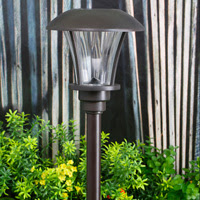
From time to time we tried to open up a market opportunity for domestic garden lighting but always came up against a major problem. Hardly anyone had an outside electrical supply and didn't fancy spending a £100 or so to get an electrician in to light up some roses. Last weekend we bought a pack of 8, for what was described as 'Smart Yard, LED  large solar lights'  all for under £40, or put another way, approximately £5 a fitting. The LEDs neatly solve the need for a mains electrical supply - a technology not available to us 40 years ago - but what was interesting was the pricing and by inference, the cost and the journey from manufacturer to end buyer.  The units contained LEDs, associated electronic driver circuitry a photocell, a waterproof housing  with windows and  mounting spike plus packaging, probably at a cost to sales of £2 to £3! But wait a moment, country of manufacture was shown as Taiwan, imported to California, USA and shipped to Costco in Milton Keynes, England. In short made on the other side of the world, shipped via America to England , sold by an American outlet all for a few pounds. I am left wondering how much cheaper would it be without any import duty to the EU [averaged duty for this class of product is over 15%] and this is not an isolated example either.

So what would change if Britain leaves the EU. In this scenario just the import duty would go, we could pick this sort of stuff even cheaper.

Tuesday, March 15, 2016

The market environment - political considerations


In recent blogs we have looked at the issues of EU membership that have had an impact on product development. We have noted that global requirements are now increasingly more relevant than national or European ones. Mandatory test standards tend to have evolved from national standards to International standards. Technical barriers have been overcome  so developing products for world markets can be managed in many ways regardless of EU  membership.

This time we look at price penalties in the form of an import duty which may be tougher to deal with. One  current issue being debated is whether Britain's trade with the rest of the world will be more successful by remaining inside the European trading block, or will it flourish outside once free of EU  constraints. A major question is the application or absence of tariff barriers and the prospects of securing alternative trade agreements should Britain opt out of the EU. Having been members of the EU for more than 40 years, many people will have had no experience of business in an independent country despite Britain having traded freely and successfully around the world for centuries.  It is not surprising the 'Remain' in the EU side are playing the 'Fear' card promising all sorts of bad things should voters choose to leave and take a step into the big unknown. But is it really that unknown? Europe is in decline, the currency has had a hard time, some member countries are probably bankrupt, many countries are dealing with immigrants by literally fencing off borders with razor wire, there is growing unrest and political dissent even in Germany and France who along with Britain bank roll the whole show. Eurosceptic parties are gaining support and a British exit could serve to hasten the inevitable collapse of the EU, at least in its present form.

The outcome of the British Prime Minister's renegotiation  of the terms of Britain's membership of the European Union were finalised towards the end of February. They seemed to come down to just four issues which government spin presented as a significant reform of the EU, while others see these proposed changes falling a long way short of any serious reform, in fact marginal at best. The Prime Minister apparently regards these changes sufficient to commend continued membership of what he now calls a reformed  EU to the British public at a referendum slated for June, to let the voters decide if the country stays or leaves.

The concept of a referendum is itself something of a continental expression of public sentiment, whereas Britain has a long established tradition of voting for a party programme or manifesto at a General Election, although local factors such as the popularity of the local Member of Parliament can have an influence in the 'first past the post' winner takes all outcome. Most European countries use a system that correlates the number of seats won to the number of votes cast, so the party with most votes gets most MPs elected and if that is also a majority percentage they get to form the government.The thing is getting over 50% of the popular votes is not what usually happens, so coalition governments are the usual outcome.

But in Britain the local votes determine which party gets the MP in each constituency and  for several decades it has been a two horse race between the Conservative Party and the Labour party. Constituency sizes vary considerably and from time to time are reviewed but typically the 2 parties have see sawed back and forth forming alternate majority governments. It is possible to get a majority of seats without having anything like 50% of the vote; 40% will probably do it. However things have been changing.The two main parties of government have pursued similar policies and all the main political parties support membership of the EU. In fact the so called third party - the Liberals - are even more enthusiastic about Europe than the Labour and Conservative parties which include MPs - the Eurosceptics - who are less enthralled by the European project.

The British voters generally have shown scant interest in Europe until in more recent years there was a growing concern at the increasing number of immigrants from the less affluent eastern states of Europe which became noticed at the day to day level with pressures on services such as health, education and housing. It seemed that nobody really knew how many people from European countries were now in Britain, although it ran into millions. The governments of the day helpfully explained that nothing could be done because of European legislation - an explanation for pretty much everything. For years the popular press more in tune with the public mood had made fun of the European desire to legislate for even the most trivial thing from the curvature of bananas to the classification of carrots as fruits. So  when the  British voter looked for a political party that reflected their concerns there was an electorate ready for an openly Eurosceptic political party. And they didn't have to look far. Waiting in the wings was UKIP with a simple solution to the various concerns with their origins in European inspired laws and that was to leave the EU and govern ourselves.

And so in the 2014 UK election for Members of the European Parliament, UKIP became the largest party with 24 seats from 4.36 million votes, Labour with 20 seats from 4.02 million votes and Conservatives 19 seats from 3.79 million votes. The Scottish Nationalist polled 389 thousand votes and won 2 seats. But using the traditional UK  first past the post electoral system at the 2015 General Election the results were very different. The Conservatives with 36.9% of the vote won 331 seats, Labour with  30.4% won 232 seats, the Scottish Nationalist  with 4.7% won 56 seats while  UKIP's 12.6% as the third biggest party translated into just one seat. Put another way nearly two thirds did not vote for the government. Mind you compared to the EU where the people that run the show are not elected at all, The Democracy Deficit in the UK seems trivial.

So the big issue of whether Britain stays in or opts out comes down to the British electorate in a referendum, a rarely used tool in Britain. With the political establishment campaigning to remain members of the EU and backed by big business and big trade unions all motivated to protect their perks the leave campaign which seems barely visible is in the hands of a few maverick politicians, small businesses and the general public.

Sunday, March 06, 2016

Design by consensus

Designing new products generally doesn't work when the task is handed to a committee and is even more likely to  result in failure when that committee comprises members from several different countries.

It has been claimed that the camel is a horse designed by a committee and that is what you get when trying to meet the key demands of all parties. In the early years of operating in the then Common Market nothing much really changed except as a product manager I  was sent off to Europe on some sort of fact finding mission. My first trip was to Sweden, not then even a member of the EEC - the European Economic Community - but one of our best markets for floodlighting products  outside the UK. I  learned little of interest relevant to designing products for that particular market, but more about the people who had wanted to give input to the next phase of product development. I  took away a simple message that those who were making good progress in the market and shouted loudest got listened to. Basically we tended to modify design to suit products that were already selling well rather than attempt to design a pan European product that could be sold anywhere without modification. The real challenge was to develop products that were better than the competitors and price competitive.

My next company operated in more of a niche market and the MD - one of several who occupied the hot seat during my 10 years there - became bored with all the moans he got about our product not suiting the market in every country he visited and so insisted on each sending a representative to design meetings. We would have been lucky to come up with a camel, yet only the horse.  Bringing them all to London and getting them in the same room was challenge enough and keeping them in the room even tougher. Each had some favourite element that must be included in the final product. If we had actually incorporated all of them, the product would look ridiculous in any country and be burdened with a high cost overhead. Design is not really a committee thing, less so if the individual members have some private agenda to get some feature or the other in. And lets face it, even if they were all from the same country most people have little idea anyway, until that is you have made a product. Then they will soon tell you what is wrong with it. But ask them to explain upfront and it is a different story.

We had manufacturing in several locations, but mainly in Italy, Scotland and the USA. A visit into the factory in Italy was itself instructive. Stop and examine a product making its way through assembly would soon draw a crowd of excited Italians who all seemed to be frustrated designers, oblivious to the work piling up at the work station they had abandoned to join the argument. Interestingly the biggest market for their products was the USA. I think it fair to say the enthusiasm for the design of products and passion for beautiful engineering was not a thing that troubled  assembly line workers in the USA or Scotland to anything like the same extent. Indeed  in some English factories they had to ask permission to visit the toilet!

It seemed to me that a good product, at the right price was what everyone actually wanted to buy and getting the designers to understand the end user needs and often the installers' preferences was more helpful than assembling an international committee. Football floodlights were an interesting example. These were often at the top of a tower of uncertain vintage and usually ex MOD  from the end of WW2. Climbing some 200 feet up a lattice construction tower was bad enough but then fiddling around with an Allen key to tighten up the screw was not something designers thought about until I  took them to a major football stadium and made them climb up and see for themselves. In Sweden by the way they often had to do this in sub zero temperatures!

All said, British membership of the EU as the EEC  became, had little real impact on product design or acceptance in other countries. The test standards did, but then it is international standards that are more relevant than now. While all this focus on European issues was going on, the Japanese and later the Chinese were making great inroads into our markets without needing to be members of the EU.  The larger companies in the UK did have some input to British Standards and sometimes to European standards as well, smaller companies did not have that advantage. So we are left with tariff barriers and cost issues. Again, experience suggested that compliance with standards was not always mandatory. It is the old marketing Product, Price, Place and Promotion which had to be sorted.

Monday, February 29, 2016

Can one product fit all markets?

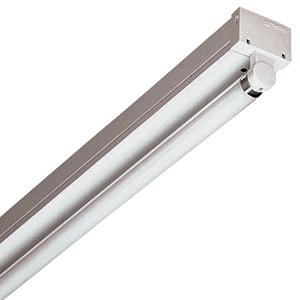
A fluorescent light fitting - now a luminaire.
You might have thought that one product could suit all markets, or be made to suit all markets. After all a light fitting was in essence a relatively simple product. Like most companies in the UK at the beginning of the 1970s our products had been developed with the British market foremost in our considerations.  But before going down that route lets think about the market influences at that time.

In 1973, Britain, along with Ireland and Denmark was about to join the Common Market, with its six existing members of France, Italy, Germany, Belgium, The Netherlands and Luxembourg. As a Product Manager, my brief was to specify new products taking input from the UK  sales team, obligatory  design features to meet legislation, to figure out the price and unit cost, tooling investment  etc and then steer the product through all the essential design to production stages then on to building stocks and getting  them selling. Sales were mainly to national electrical wholesaler chains.Wholesalers bought at a discounted price from the manufacturer, then sold on to electrical installers at a further discount. So the business model was the manufacturer usually held a national buffer stock, distributed  the goods to wholesalers, who in turn held stock and sold over the trade counter to the contractor. Pricing structures were retail trade price or net trade price with discounts talked about as '20 and 5' or '40 and 10'. Keeping the supply chain full of stock was the prime aim. The brand leading lighting fittings sold in tens and hundreds of thousands, even millions, so there was a huge manufacturing investment in production lines allowing us to be the lowest cost producer.

So what effect did the Common Market have? We were set up to be the lowest cost producers in the most commonly used products, always have stock, promote the product with incentives for the wholesalers to stock and electricians to buy and install - a business model that saw volume grow year on year. But the Common Market knocked all this on the head. For the same generic fitting, which by the way we now had to call a luminaire, the supply voltage was 220volt (on a good day) not 240 volt, electrical connections were different, lamp caps were different, electric plugs and sockets were different and building module sizes were different. But what was really interesting was that there were differences from one Common Market country to the next! Oh yes! Britain had gone metric in anticipation of this happy day when we became European, but large parts of this same Europe expressed dimensions in metres and centimetres but  used the internationally standardised BSP for screw threads. So when at the behest of the Common Market, screw threads were changed to the shiny new metric sizes we phased out the one inch BSP etc and phased in 25mm threads instead. Then the complaints started to arrive from all over Europe that your light fittings (sorry luminaries) don't fit our conduit anymore. It then emerged that not everyone had signed up to be metric in Europe, they stayed with the international standard of BSP! And what does BSP  stand for? Why, British Standard Pipe of course whose origin may have been in the age of gaslight.

But this was just the first step in encumbering manufacturing industry with unnecessary and unwanted additional costs which ended with manufacture moving off shore to China.


As Britain votes to stay in the European Union or leave, this blog will run a seri es of articles on some of there practical experiences of business in the EU.

Thursday, February 25, 2016

The market environment

The markets in which we sell our products and services can be influenced by several external factors which establish the market environment.

Some of the important factors are product related and will include compliance with local legislative and safety standards, custom and practice and functionality among others.  Competitive issues can affect the product design and will also include price, distribution and post sales support and service. Then there are the political factors which can have a bearing on all the rest.

Moving product across borders can be challenging as it often will involve meeting not only safety and performance requirements,  over coming local preferences and local competition, but tariff barriers imposed by politicians.

At one time and not so very long ago, British manufacturers divided the world into two main areas of operation - the home market and the export market. The product was designed primarily for sale in Britain and export sales mopped up surplus production capacity and as exports were to British influenced and English speaking markets it all worked quite nicely. British Standards were usually well accepted in Commonwealth countries and the bigger British companies through their membership of trade organisations often had a seat or two on the BSI  committees that wrote the standards. To some extent the resulting standards reflected best practice and realistic test procedures.

Then it all started to change as Britain became a member of the EEC or what was usually referred to as  the Common Market. In Europe there were different standards and criteria to meet. In the lighting world not only did lamps in Europe have screw caps instead of bayonet caps, but they worked on a different supply voltage, the light fittings had different plugs and products used metric screws. The style was different too.  Commonwealth preferences were scrapped, making raw materials more expensive for British manufacturers. In short the political lure of access to a much larger market was not what the manufacturers wanted really. We were now operating inside a tariff union, but not in a uniform market, instead a series of national markets. As marketers looking at continental Europe we faced a number of challenges - the product typically didn't suit any of them, a number of different languages to contend with, lower priced local competition, different local custom and practice and no 'in place' infra structure or service support. The markets were reviewed by sales opportunity - Germany was the biggest and had the hurdles of DIN  standards and TUV Test Houses to navigate, Italy led the Latin sphere of design influence and Sweden led the Scandinavia area - both were far superior in creative design and elegance which at that time was fairly brutal in the look of British products. Smaller countries acted  as wholesalers and grey importers to the bigger countries over the land border. Fortunately for Britain  the soaring oil priced which quadrupled in the early 1970s created a building boom in the Middle East, with countries like Iraq, Iran, Saudi Arabia and the Gulf States whacking in big orders for our standard products. Our challenge was not to develop products for all Europe' arcane custom, but how to churn out enough standard product. And it wasn't long before Britain itself became an oil state.

As Britain decides whether to vote to stay in the European Union or  vote to leave, this blog will run a short series of articles on some of the practical experiences of business in the EU.


Tuesday, February 23, 2016

This is a club we should never have joined ... continued

The euro flag
Over the weekend Prime Minister David Cameron returned from day and night negotiations in Brussels with a fantastic deal for Great Britain. He wisely avoided stepping off a British Airways plane waving a piece of paper and declaring it heralded peace in our time. So good a deal in fact that a Cabinet  meeting was convened on the Saturday morning - the last time that happened was when Britain had to go to war to eject Argentine invaders from British territory. It seems we will never as a country have to join the Euro currency, neither do we have to be more deeply integrated politically and some changes in immigration would be permitted as well. The Referendum is set to take place on 23rd June. Some cabinet ministers and a large number of the PM's governing party immediately came out in favour of leaving.

So far the 'stay in' campaign has taken the line that leaving will be sure to end in tears, that we are far better off as a member of the European Union and will lose all the great things the EU membership bestows on Britain, should we vote to leave. Those advocating leaving take a more optimistic view that we will be breaking free from an old fashioned trading bloc which is in decline to return to the global trading world where we will flourish once again.

The British membership of what is now the EU has so far been just over 40 years - a small period compared to the centuries when Britain was independent and incredibly successful. In fact  by 1922 the British Empire extended globally with dominion over no less than a quarter of the earth's surface and some fifth of the world's population all, democratically ruled from London.  London was and remains a global leader in the financial markets and of course introduced English as the language of business. It was the Empire upon which the sun never set. But by the mid 1960s the Union Flag was being hauled down all over the world as country after country became independent. It left a question mark over where Britain would now go. Europe suddenly looked attractive - perhaps we could join that. Centuries of keeping Europe at arms length and interfering only to avoid any one country dominating and being a threat to Briton. So while Europe raised large armies for land based wars, Britain looked outward to the world, became a maritime nation and colonised a quarter of the world and where the flag was planted trade followed. Not surprisingly Europe was not a replacement for the Empire and was dominated by Germany and France.

Few people in Britain considered themselves European and the place if mentioned at all was generally referred to as the continent. It was once said that a newspaper headline announced, "Fog in the Channel - Continent cut off." It helps explain the relative disinterest in Europe, even the outbreak of World War 2 vied for attention with news of the Test Match. Only England and its Empire played cricket - another  cultural difference. In the post war years for most people the continent was not a holiday destination, those who could afford a holiday at all headed for the British seaside resorts. For many families the only experience of the continent was with the army, people didn't hold passports in the main and anyway considered the continent to be a rather dirty place where it was unsafe to drink the water and to cap it all they spoke a number of foreign languages. In short the English speaking world did things differently and the geographical proximity of France merely coincidental.

It is surprising that the political class were so optimistic that it would all work, but then we were only looking at trade opportunities, not political union.

Friday, February 19, 2016

This is a club we should never have joined

So the lights burned brightly through the night in the chancelleries of Europe last night without reaching an agreement. The occasion? The latest bid by a British Prime Minister to change at least one or two of the rules of the European Union that are currently most irksome to the British electorate. David Cameron, the smooth former PR man, was hoping to conclude his charm offensive and win some concessions which would be welcomed back home and allow him to hold a referendum and back the case for Britain to remain a member of the EU.  Of course he was following in the footsteps of the 'Iron Lady' who had famously banged her handbag down on the table and demanded her - well Britain's actually - money back.

Neville Chamberlain
   The whole theatre of the current Cameron initiative merely serves to highlight the huge difference between the British way of doing things and that of what earlier generations would have called 'Jonny Foreigner.' Of course some sort of deal will be done, the issue however is will it really mean anything? Turn back the years to the Munich Agreement of 1938 when then PM, Birmingham boy Neville Chamberlain returned from Europe flourishing a piece of paper and to a cheering crowd gathered around a British Airways aircraft, extravagantly declared it was 'Peace in our Time' - Britain and Germany would never fight and the future of Europe would be one of peace.

By 1946 Europe was beginning to emerge from the ravages of the Second World War which had been the actual outcome of the Munich Agreement. It was said "The Second World War had one victor, the United States; one loser, Germany; and one hero, Britain." Winston Churchill was the personification of the hero due to his wartime leadership and gift for finding just the right phrase for each occasion - the enduring sound bites. By 1946 he was talking about the United States of Europe and by 1949 the Treaty of London had established the Council of Europe. Meanwhile the repair of collateral damage was being organised by the British Army with the European Coal and Steel Community being the first practical example of a co-operative production and marketing.

Ted Heath
So where did this whole thing go wrong for Britain? The EU  was as much a British idea as anyone's but some how we found ourselves on the outside as it evolved into The European Common Market and kept out by General Charles de Gaulle's use of the French veto. De Gaulle was the highest ranking officer who made it to Britain following the fall of France and was kind of invented as the leader of the Free French by Churchill - a rallying point and propaganda opportunity. His war years spent in Britain would have given him ample scope to figure out that the British way was at odds with the European ways of doing things. There was little public interest in joining the Common Market as it was presented as a trading group, certainly not a political alliance, still less a single European country. There was no referendum to decide should Britain be in or out and anyway the French veto kind of made the decision for us and after all it was only 6 war torn countries banding together. But one leading negotiator, Edward Heath was sufficiently determined to get Britain in which when he became Prime  Minister himself he achieved in 1973 having signed away many of Britain's  rights and assets including access to our own waters for fishing. In 1975 Prime Minister Harold Wilson held Britain's first ever referendum in which 67% of the electorate voted to remain members.

The last election of members to the European Parliament in 2004 was won by the United Kingdom Independence Party [UKIP] with24 seats and 4.36 million votes leaving Labour [20] and Conservatives [19 ] in 2nd and 3rd places.

 This is the first of a series of articles leading up to the UK referendum.


Tuesday, February 16, 2016

Media - As The Independent goes digital only, Parliament stays with vellum

In a week when the Independent newspaper announced the end of the printed version, British laws will apparently continue to be recorded on vellum. Not perhaps a good week if you are a paper maker then.

I am sure I am not alone in being unaware that Parliament recorded laws on vellum - or calf skin. Apparently recording our laws on vellum is a millennium long tradition and surprisingly cost effective. Apparently vellum lasts for 5,000 years, paper a mere 200 years. How does digital fare I wonder? Old files and I am talking perhaps a little more than 10 years, stored on the original current media are pretty much inaccessible now. Optical storage, floppy disks, CD s, flash memory - whatever quickly disappears and old files mysteriously corrupt. Is digital more an ephemeral storage medium, will digital work actually survive? Will our thoughts survive - does anyone care?

Wednesday, January 20, 2016

Now long form content is the latest thing in marketing

Suddenly a number of marketing sites are talking about long-form content. So what is this and why is it a good thing?

As with many emerging ideas, there is yet to be any formally agreed definition, but basically it is longer than normal content that engages the site visitor.

Take a step back. At one time it was widely claimed that if you didn't engage the visitor within seconds, then they would lose interest and head off to the next web site. Perhaps when generic search was common, there were usually a lot of sites turned up on search to check out. But is this still the case? Taking a straw poll of b-2-b people, by now they know the web sites of the companies they deal with and use the site rather like a product catalogue. Search Engine Optimisation, where one technique used is to load the copy with keywords tended to call for longer text into which all the potential search words could be included. One report suggests that although SEO boosted site traffic, engagement was not so good. Visitors didn't stay too long.

So how long is a piece of string? Or in this case how many words qualifies as long content? For comparison how about press releases? Again, it is probably not defined and varies according to the publication, but 100 words is not that unusual and they will probably edited get down. A press release in a paid for journal will include a short headline, image, maybe a logo too and contact details. Yes it is a short ad. Press releases are more usually in the 100 to 250 word range before the editor begins to think of the piece as an article. Articles are not submitted without being requested by the editorial side and can range from 400 words to 2,000 and may also include an image or two. The thing is, even at the upper end of this word scale many subjects can still not be covered in depth and so we produce White Papers and Guides to provide more detailed content.

Now here is an interesting thing. When content (and of course this has to be relevant and of value to the reader) is in the 1,000 to 1,600 range and taking 7 or 8 minute to read, then time spent on site increases considerably too. Long content might be used on a landing page from a campaign  to provide valuable content the visitor wants to know. It may more commonly now be placed on a blog and also on social networks - Facetime and LinkedIn have both having developed platforms for long content. And of course, producing long form content marks you out as knowledgeable which helps enhance the brands value.

Wednesday, January 13, 2016

Is email the right vehicle for building sales relationships?

Is email correspondence an adequate alternative to telephone contact  or  a sales visits?

There are some interesting pointers to economic and sales activity which some suggest give indicators of how good, or bad things are. Let me give some examples. The number of cranes on the  skyline might serve as a simple indicator of construction activity which in turn is a measure that the economy is on the up. Walk into a businesses premises and there are plenty of indicators of how successful is the business. In a typical manufacturing business, say, a walk through the warehouse can often give the game away by looking at the carton labels (and dust) to get the idea of how quickly, or not, the stock is moving. Have a look at the company's leading products - are there any on the shelves, are there too many? What about the sales office, are the phones busy? Or is everyone typing emails?

A few years, well decades ago, the electrical manufacturing business I worked for had a large team of salesmen 'on the road' and a culture of sales that pervaded all areas of the business including R&D and production. Both the research labs and production lines were used as sales assets with customers invited to see have clever we were. But the front line sales people were the people who really closed business and importantly got inside the customer company and opened up other sales opportunities. In some internal sales offices the telesales teams were recruited for their persuasive sales skills where the value did not justify a face to face sales call.

So the question is can selling by exchange of emails be as effective with no real sales relationship to build trust and confidence? There is restricted scope for really understanding what the customer actually needs and introducing alternate or additional products. In fact it doesn't really do much more than a basic web site and leaving it entirely to the customer to conclude the sales journey themselves.


Wednesday, January 06, 2016

Update on data

Databases can be powerful marketing tools, but are yours up to date?

Most companies I  have dealt with over the years have acquired a form of mission creep when it comes to databases in so far as they don't have one database, they have several. In fact if you count in those held by individuals there could be dozens. And it all happens innocently enough. Lets look at some of the reasons why.

There is the salesman's personal customer list that in pre-computer days would be held on a card index and it has to be said jealously guarded, considered a private set of records not to be shared with anyone. At the other end of the sales process were the records held by the Accounts team of Invoicing contacts. Although working for the same organisation the accounts people generally had little say in the specification  and choice of goods to buy - that was more a relationship between the sales engineer and the specifying engineer for example. However into this equation has come the buyer and this role can be a problem for companies providing technical support to the end user at product prototype stage to fine tune their product, all secure in the hope that low orders for prototypes would transfer into high volume orders year on year as production ramped up. This cosy situation was under pressure once the professional buyer started looking to suppliers in China. So customer contacts could be different according to where in the sales process they were and databases proliferated.

Then there are the social events databases of people considered important enough to invite to events whether it is the launch of a new product or a hospitality suite at a sporting event. And of course there is the Christmas card list, the newsletter list, the technical bulletin list ... need I  go on?

Another frequently encountered problem was dealing with the database technology. There were one or two brand names in the world of sales databases that cropped up again and again. The usual problem was that someone, often at a senior level in the company had been impressed by the sales presentation and signed up for the system. The job of looking after it was frequently given to a junior member of the team and not only did they struggle to use it, but nobody else wanted to take on some of the work and the database soon became a mess. Nobody knew what data was good and what was outdated or just plain wrong.

The thing is sending marketing communications to the wrong people - left, deceased, moved away, new job etc - is not only a waste of money, but can be counter productive if people think you don't know what you are doing.


Wednesday, December 16, 2015

How about a book for Christmas?

Buy now
Choosing a suitable Christmas gift can be a challenge. At one time a DVD  was a useful standby gift idea, one that didn't usually require too much knowledge of the recipient's interests, could be wrapped up easily and would be appreciated. But now everyone seems to download movies, box sets and the like and movies have gone the same way as music and to some extent books with their contents held in the ether, or cloud. 

I am not sure we are all yet ready for a fully digital Christmas where in place of opening up intriguingly wrapped presents from under the Christmas tree we sit around with our iBooks, iPads and iPhones and open our downloads! Recently I  received a Kindle as a birthday gift and this has great merit when travelling thanks to it being physically small, lightweight and yet easy to read. In these days of carry on hand luggage, books consume both space and add to weight that could otherwise be used by some essential items of clothing. 

On the other hand, books to read when flying or on holiday will probably be fiction. I was once influenced by a list of titles in a national newspaper recommended as suitable holiday reading for people in business as sources of new ideas, or essential background briefings for anyone with ambitions to succeed. That turned out to be a big mistake. They were just boring. However the concept of reading other people's ideas is quite compelling. Over the years I  have assembled a very small library - well short bookshelf really - of books that once read proved useful to refer to from time to time as a source of information when writing an article, drawing up proposals or prompting thoughts.   These books are all characterised by 'Post-it' notes sticking out of the tops of pages to bookmark some helpful references. Somehow they are more accessible than the links I bookmark to useful online references.

Running a small business which involves marketing strategy and content development, the small office library comes down to just a few subjects:-

Marketing - Marketing in a Competitive Economy by Leslie W Rodger, The New Rules of Marketing & PR by David Meerman Scott and the recently published Technical Marketing - Ideas for Engineers by David Brooks.

Management - The Practice of Management by Peter F Drucker and An Insight into Management Accounting by John Sizer.

Reference - The Oxford Dictionary, Roget's Thesaurus, two books on web design and HTML, A to Z London and AA Road Atlas Britain, plus a few operating manuals for various bits of kit.


Thursday, December 10, 2015

Digital marketing - rules of engagement

One thing marketing in the Internet [or digital] age does not lack is jargon.

As systems and software permit "tracking behavioral metrics online" we can be delivered a whole load of data about individuals. With a joined up system we can review past purchases, searches, page views, actions taken and lots more and apply all this stuff to evolve digital marketing strategies. But just because a campaign reports response rates to several decimal places, it does not follow that figure is real. Mathematically it will be correct of course, but what actually happened may be quite difernt.

Just because I leave a trail of searches and page views around the Internet, does not mean I am actually about to purchase a product. But that expensive digital marketing software someone sold you will trigger various actions, in particular presenting advertisements everywhere you now go as part of an engagement strategy.

Engagement is another popular jargon term for stalking a customer or prospect  who by online actions has been flagged up as a potential buyer.  So wherever you now go online the advertisements follow, offers pop up, emails arrive. It's all about personalisation. At one time it was much simpler. Companies had salesmen that 'engaged' with the customer. B-2-B marketers regarded these as being their target audience and looked for others like them as potential prospects who read specific trade magazines and attended particular trade shows. So the marketing team advertised in the journals the target audience read, posted press release to the  editors and exhibited at trade shows. The enquiries these activities flushed out were passed on to the sales team as leads. In the industrial sector the company typically sold a basic product which for many b-2-b's could last for years before a replacement sales opportunity might crop up. Happily much of this stuff needed accessories to work effectively - always a good thing to sell to a captive market as margins were always higher than on the base product. Consumables offered another profitable source of revenue and then the maintenance contract. All good opportunities to keep the customer engaged and bring forward the time for a replacement base product was purchased by talking about new models during visits.

As field salesmen were phased out in many companies that personal customer contact went to in-house teams who were less well placed to build the same rapport a good salesman could create. I was always impressed when out on the road with some of our salesmen how they could turn a 'no' into a big order. Also salesmen actually got to see how customers used the products - if acted on a good source of market intelligence. I am surprised how in many companies today the internal sales force seem more at home selling via email exchanges rather than using the phone. Meanwhile prospective customers are engaged in the early stages of researching products based on their own trawling round the web, which seems to be assumed includes social media sites and even closing the sale through an online purchase. And into this mix comes digital marketing software tools which aggregates all this stuff.   


Thursday, December 03, 2015

Digital Marketing - what does in mean for b-2-b companies?

The term Digital Marketing is gaining traction as digital agencies spring up or emerge from traditional advertising agencies. But what exactly does it mean in the b-2-b world?

Engineers probably have a different concept of the term 'digital.' For many it was effectively an advance over analogue systems. Instead of sending data as a continuous time variable signal each using a dedicated line, digital divided the data into packages which could all be sent down the same wire using a protocol such as DMX. But I don't think that's what digital agencies are about. 

Think back 20 years or so ago when print was suddenly not the only media agencies could  output their work to. CDs, then DVDs came along and agencies started talking about being New Media agencies. A term that has already faded away. What digital agencies are mainly about is using Internet tools and systems bundled up with software to gain greater engagement with their customers and prospects. 

Wikipedia describes digital marketing as "an umbrella for the targeted, measurable and interactive marketing of products and services using digital technologies to reach and convert leads into customers and retain them." .... there's more ..  

Some have talked about 'engagement marketing' by applying digital tools to tracking individual behaviour. Interestingly most of these digital tools have been around for some time and there is already plenty of data about. It prompts the question for b-2-b companies could they use existing tools better - or even use them at all - or buy some expensive software package that costs thousands each year? 

A lot of this starts with having a good, 'clean' database and that is a problem. What so often happens is that names are added for various reasons by different people and in different ways which soon become out of date. Whenever a b-2-b client tells me they have 50,000 or more records on their customer database, I  can be sure at least 25% of it will be wrong. Rather than face the task of 'cleaning' the database, this old unverified and frequently wrong data gets imported into the shiny new software the sales rep sold them. Yes interesting that. If the whole marketing world is now digital, why would a company selling premium priced software need a salesman to give a demonstration when whole sales process through to delivery and billing could be done online.?


Tuesday, November 24, 2015

The publicity value of advertising

Sometimes an advertisement can be the focus of significant news coverage - intentionally or by accident.

It is hard to say which course of action has put the Church of England's pre-Christmas 60 second advertisement intended for screening in cinemas prior to the latest film release in the Star Wars series in the spotlight. Could the C of E really be that smart, or indeed that naive, to think despite approval of the British Board of Film Classification and the Cinema Advertising Authority it would not attract attention. Christmas is arguably the star in the C of E's biblical portfolio, but a brand under attack from the American big business promotion of 'Holidays' as a challenger to the whole Christmas franchise that should be the C of E's exclusive territory.

The 'Happy Holidays' mission to displace the original 'Christmas' branding has been slowly creeping in through business neutral greetings cards sent to customers for years now and gaining traction in retail outlets as the season becomes a huge sales opportunity that doesn't really want religion getting in the way. Interestingly the C of E has opted for the non-traditional version of the Lord's Prayer which provides the narrative for the advertisement which I think is a marketing error. One which may possibly risk alienating their traditional audience who might prefer the more dramatic wording of the original. Either way the Church of England has pitched in with two of its prime icons brought together with powerful images.

The news storm has gained far more mileage than the advertisement would have achieved alone.